

How Much Do Accountants Charge for a Small Business in the UK? 2026 Pricing Guide
Could your accountant actually be the most profitable “employee” on your payroll? While most entrepreneurs view professional fees as a necessary drain on cash flow, the right partnership transforms these costs into a catalyst for growth. You’re likely asking, how much do accountants charge for a small business uk in 2026, especially with the 6 April 2026 launch of Making Tax Digital for Income Tax (MTD ITSA) now affecting those with a qualifying income over £50,000.
We understand the anxiety that comes with hidden professional fees or the fear of a £200 HMRC late filing penalty landing on your mat. It’s frustrating when you can’t predict your monthly outgoings or distinguish between basic compliance and valuable tax planning. This guide provides total transparency on UK accounting fees for 2026, covering everything from £60 monthly sole trader packages to complex limited company structures. We’ll explore fixed-fee models with no hidden charges that offer peace of mind, ensuring you can focus solely and truly on your goals whilst we act as your diligent guardian against financial complications.
Key Takeaways
- Understand the shift toward fixed-fee monthly retainers, which provide small businesses with predictable budgeting and eliminate the anxiety of hidden professional fees.
- Discover exactly how much do accountants charge for a small business uk in 2026, comparing the costs for simple sole trader filings against comprehensive limited company packages.
- Learn how the April 2026 Making Tax Digital (MTD) rollout for Income Tax affects your reporting frequency and the software costs required for compliance.
- Identify the value of “beyond the books” services, such as detailed tax planning and management accounts, to help your business flourish rather than just meet basic requirements.
- Safeguard your venture from escalating HMRC penalties by choosing a tech-savvy partner who proactively monitors your records and ensures every deadline is met.
UK Accountant Fee Structures: Fixed Fees vs Hourly Rates
Are you tired of receiving a surprise invoice every time you pick up the phone to ask a simple tax question? In the past, many business owners felt a sense of dread when contacting their accountant, fearing that every minute spent on the call would be billed at a premium. Modern accounting has shifted away from this transactional friction. Most reputable practitioners belong to professional accountancy bodies, which mandate high standards for fee transparency and ethical conduct. This shift ensures that you receive the support you need without the anxiety of hidden professional fees.
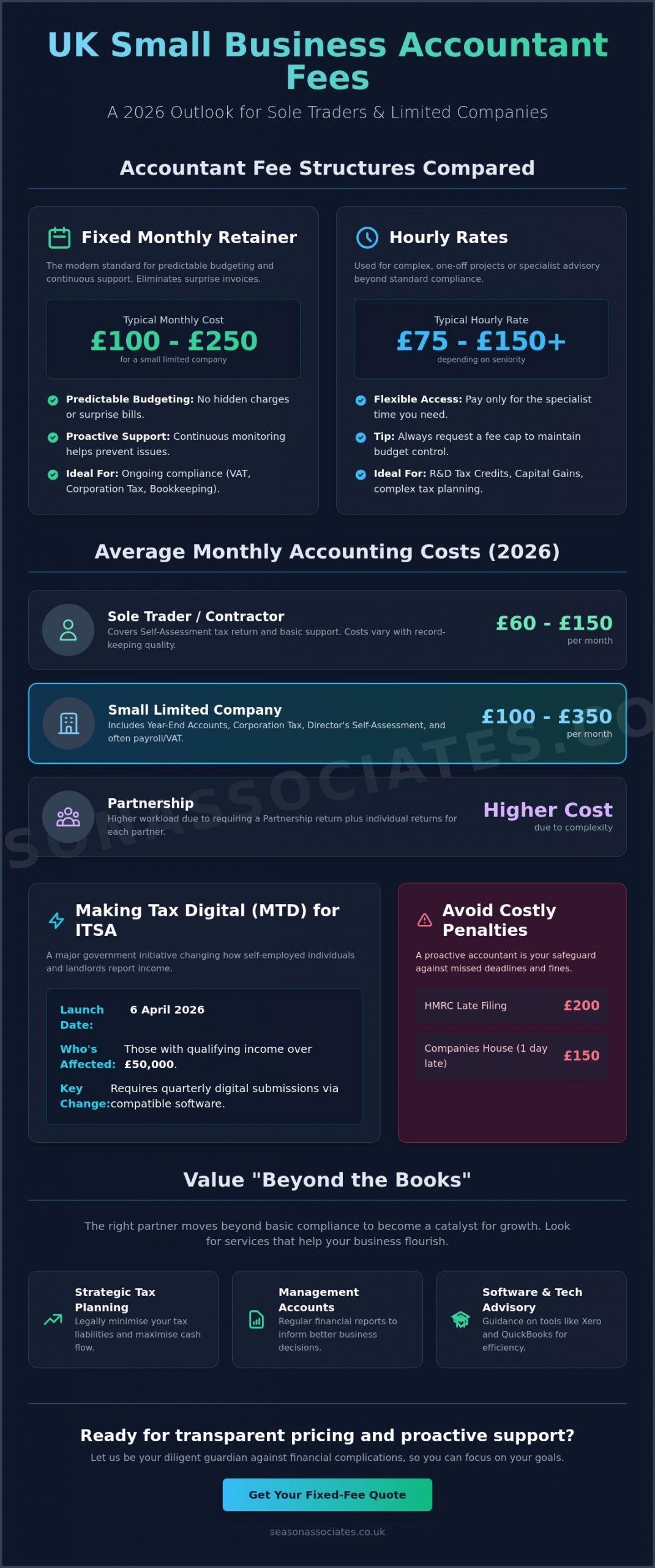
Determining how much do accountants charge for a small business uk in 2026 often depends on whether you prefer the certainty of a fixed monthly cost or the flexibility of pay-as-you-go support. Whilst “one-off” project fees for year-end accounts were once the industry standard, they frequently lead to surprise bills because they don’t account for the complications that arise during the year. A partnership built on “no hidden charges” allows you to budget with total confidence; it’s about moving beyond the books to become a catalyst for your personal and professional freedom.
To better understand how modern firms structure their transparent pricing and service levels, watch this helpful video:
The Monthly Retainer Model
A typical £100 to £250 monthly package for a small business usually covers essential compliance like Corporation Tax returns, VAT filings, and basic bookkeeping. This model acts as a “Diligent Guardian” for your venture. By monitoring records closely throughout the year using software like Xero or QuickBooks, your accountant can spot potential issues before they become HMRC headaches. Regular monitoring prevents those painful year-end tax shocks; it ensures you always have real-time information to help your business flourish.
Hourly Rates for Specialist Advisory
There are times when a fixed fee doesn’t cover the full scope of your needs. For complex projects like R&D tax credits, detailed Capital Gains Tax advice, or intensive tax planning, you might encounter hourly professional rates. In 2026, these typically range from £75 for junior staff to £150 or more for senior partners. To maintain budget control, always ask for a fee cap on hourly work. This proactive approach relieves you of all the complication, allowing you to focus solely and truly on your goals whilst knowing your specialist advice is accurately priced.
Average Accounting Costs for Small Businesses and Sole Traders 2026
Are you a Sole Trader wondering if your current professional fees align with industry standards? Perhaps you’ve recently transitioned to a Limited Company and feel overwhelmed by the step up in compliance requirements. Understanding how much do accountants charge for a small business uk requires a look at the specific administrative burden your structure creates. For a simple sole trader, monthly fees in 2026 typically range from £60 to £150, whilst a small limited company should expect to budget between £100 and £350 per month depending on transaction volume and turnover.
The complexity of your business model plays a significant role in these figures. Partnerships, for example, involve a higher workload because they require both a partnership return and individual Self-Assessments for every partner involved. Similarly, businesses in niche sectors like healthcare or legal services often pay a premium for specialists who understand their unique VAT exemptions or regulatory reporting. Following official government guidance on your responsibilities is essential, but having a partner who monitors records closely ensures you don’t fall foul of the £150 penalty for being just one day late with Companies House filings.
Sole Trader and Contractor Costs
If your records are straightforward, a one-off Self-Assessment Tax Return typically costs between £150 and £600. However, most modern entrepreneurs prefer a monthly model to ensure their books are “MTD-ready” for the 2026 requirements. For contractors, particularly those affected by IR35 regulations, comprehensive support often includes contract reviews and payroll management to ensure tax efficiency. You can keep these costs toward the lower end of the scale by organising your digital receipts and using cloud software effectively; this allows your accountant to focus on tax planning rather than data entry.
Limited Company Pricing Tiers
Limited company fees scale significantly with turnover. A micro-entity with a turnover under £50,000 might find basic compliance affordable, but as you cross the £90,000 VAT registration threshold, the workload increases. VAT-registered businesses typically see monthly fees rise to between £200 and £450. This increase covers the quarterly digital submissions and the detailed reconciliations required to avoid a 7.75% interest charge on late Corporation Tax payments. Most firms bundle the director’s personal Self-Assessment into these company packages to provide a holistic view of your finances. If you’re unsure which tier fits your current growth stage, speaking with a reliable accounting partner can clarify your requirements and help your business flourish.
Evaluating the Value of “Beyond the Books” Services
Are you treating your accounting fees as a static cost or a strategic investment? While basic compliance keeps you legal, “beyond the books” services are what truly allow a venture to flourish. When calculating how much do accountants charge for a small business uk, it’s vital to look past the base fee. The real value lies in a partner who acts as a shield against HMRC complications whilst identifying tax-saving opportunities that often pay for the service itself. This proactive approach ensures you’re not just filing forms but actively building a more profitable future.
Payroll and Pension Administration
Managing a team brings the heavy burden of Real Time Information (RTI) submissions and auto-enrolment pensions. For small teams of one to five employees, you might expect to pay between £2 and £6 per payslip. Many firms offer a flat monthly rate starting around £30 for micro-businesses to keep costs predictable. Outsourcing this is often more affordable than maintaining in-house software, which can cost over £25 monthly just for the license. This support relieves you of all the complication, ensuring your staff are paid accurately and your pension duties are met without fail.
VAT Monitoring and CIS Returns
VAT registration is a major milestone, but it introduces the risk of an HMRC tax investigation if records aren’t meticulous. Quarterly VAT filing typically costs between £50 and £150 per submission depending on the complexity of your scheme. Whether you use the Flat Rate Scheme or Standard VAT, a tech-savvy accountant using Xero or QuickBooks can process this with just a click of your finger. For those in the construction sector, CIS returns are equally critical. Accountants often charge £10 to £30 per month to verify subcontractors and submit monthly statements. Detailed record-keeping reduces the professional time required, keeping your fees reliable and transparent.
The true ROI comes from proactive tax planning. A “Diligent Guardian” doesn’t just record what happened; they look ahead to minimise Corporation Tax or Capital Gains Tax liabilities. By monitoring records closely throughout the year, an accountant can suggest R&D tax credits or capital allowance claims you might otherwise miss. This level of partnership ensures you can focus solely and truly on your goals, knowing your financial health is being optimised for maximum growth without any hidden charges.
The Impact of Making Tax Digital (MTD) on 2026 Fees
Are you prepared for the significant shift arriving on 6 April 2026? For many years, the annual Self-Assessment was a once-a-year hurdle, but the landscape is changing. From April 2026, self-employed individuals and landlords with a qualifying income over £50,000 must comply with Making Tax Digital for Income Tax (MTD ITSA). This regulation replaces the single yearly filing with a requirement for digital record-keeping and quarterly updates. Knowing how much do accountants charge for a small business uk in this new landscape is essential for your 2026 budget, as the increased frequency of HMRC interactions naturally impacts service structures.
Whilst some competitors suggest MTD is a minor adjustment, the reality involves a fundamental shift in how your data is handled. Instead of a “shoebox” of receipts at year-end, your accountant now acts as a tech-savvy mentor, ensuring your digital records are accurate every single month. This proactive approach relieves you of all the complication, but it does mean that 2026 fees often reflect the four additional submission deadlines: 7 August 2026, 7 November 2026, 7 February 2027, and 7 May 2027. Transitioning early is the most effective way to avoid the new points-based penalty system, where reaching a threshold triggers an automatic £200 fine.
Digital Transition and Software Costs
Modern accounting relies on cloud-based systems like Xero, QuickBooks, or FreeAgent to provide real-time information. Subscription fees for these platforms typically range from £15 to £35 per month, though many accountants provide these licences at a discounted rate within their fixed-fee packages. The initial cost of transitioning from paper records or basic spreadsheets to a fully digital workflow may involve a one-off setup or training fee. However, once established, the ability to view your tax liability with just a click of your finger often reduces the time spent on year-end reconciliations, leading to more predictable professional costs.
MTD for Income Tax (ITSA) in 2026
The 2026 thresholds mean that more business owners than ever will require professional support to manage quarterly updates. If your income exceeds £50,000, your accountant’s role moves beyond the books to become a “Diligent Guardian” of your digital compliance. Fees in 2026 are increasingly structured to cover these five key interactions: the four quarterly updates and the final end-of-period statement. By monitoring records closely throughout the year, your partner ensures every submission is accurate, helping you avoid the stress of last-minute filings. If you need to modernise your records before the deadline, you can book a cloud accounting implementation to ensure your business is fully prepared to flourish in the digital age.
Choosing the Right Partner: Transparency and Growth
Are you tempted by the lowest headline figure on your screen? When investigating how much do accountants charge for a small business uk, it’s easy to fall into the trap of choosing the cheapest quote. However, a low price often masks a “compliance-only” service that ignores vital tax-saving opportunities. A true partnership is about more than just data entry; it’s about having a Diligent Guardian who proactively monitors your records to prevent the £150 Companies House late filing penalty or the £200 MTD fine before they ever occur. Choosing the right partner means finding someone who views your success as their own.
Transparency is the cornerstone of any reliable professional relationship. You should feel a sense of “calm competence” from your accountant, knowing they are a shield against the 7.75% interest HMRC now charges on late Corporation Tax payments. A free consultation is the perfect opportunity to assess this cultural fit. It allows you to determine if the firm understands your specific industry challenges and whether they have the tech-savvy approach needed to help your business flourish in a digital-first economy. This initial conversation relieves you of the uncertainty, providing a clear roadmap for your financial future.
Red Flags in Accounting Quotes
Always scrutinise the fine print for “hidden charges” that can quickly inflate a seemingly affordable monthly fee. Watch out for vague “administration costs” or unexpected markups on cloud software licences that should be transparent. Some firms offer a bargain-basement price but then charge extra for every phone call or email query. This transactional approach creates anxiety and prevents you from seeking the advice you need. Ensure your engagement letter explicitly includes HMRC investigation protection and clearly outlines what is covered in your package. If a quote seems too good to be true, it likely lacks the detailed tax planning required to minimise your liabilities effectively.
The Season Associates Approach
We believe that accounting should be a catalyst for your personal and professional freedom, not a source of stress. Our commitment to “no hidden charges” means you can budget with total confidence, knowing exactly what your investment covers each month. We move beyond the books to provide real-time information and strategic insights that help your venture accomplish its full potential. By monitoring records closely and embracing modern tools like Xero and QuickBooks, we ensure you stay compliant whilst identifying every opportunity for growth. Ready to flourish? Book your free consultation with Season Associates today and discover how we can support your journey with expert, reliable guidance.
Ready to Flourish with Predictable Accounting Costs?
Choosing a financial partner is one of the most significant decisions you’ll make for your venture’s future. You’ve seen that understanding how much do accountants charge for a small business uk requires looking past the initial quote to find true value and transparency. Whether it’s preparing for the 6 April 2026 MTD ITSA deadline or reclaiming time through automated payroll, the right firm acts as a reliable shield against HMRC complications. A partnership should provide peace of mind, not just a set of annual accounts.
Since 2014, Season Associates has provided over a decade of small business expertise to entrepreneurs across the UK. We specialise in cloud accounting platforms like Xero and QuickBooks, ensuring you have real-time information with just a click of your finger. Our approach focuses on detailed tax planning and proactive monitoring, which allows you to focus solely and truly on your goals whilst we handle the technical complexities. We pride ourselves on transparent pricing with no hidden charges, acting as your tech-savvy mentor in an evolving digital landscape.
Don’t let the fear of hidden professional fees or unexpected tax bills hold your business back. It’s time to trade uncertainty for clarity and growth. Get a transparent, fixed-fee quote from Season Associates and take the first step toward a more secure, tax-efficient future. We’re here to help you accomplish your potential with confidence.
Frequently Asked Questions
Is it worth paying an accountant for a very small business?
Appointing a professional is almost always a wise investment even for the smallest ventures. Whilst you might save a few pounds initially by managing your own books, you risk missing out on valuable tax reliefs or falling foul of complex HMRC regulations. A dedicated partner relieves you of all the complication, ensuring you stay compliant whilst identifying ways to help your business flourish. This allows you to focus solely and truly on your goals.
What is the average monthly fee for a small business accountant in the UK?
If you’re wondering how much do accountants charge for a small business uk, the average monthly fee typically ranges from £60 for sole traders to over £350 for limited companies. These costs depend on your turnover and the volume of monthly transactions. Choosing a fixed-fee model ensures there are no hidden charges. It provides you with total budget certainty and real-time information to support your business growth throughout the financial year.
Can I claim my accountant fees as a business expense?
You can usually claim your accounting fees as a tax-deductible business expense, provided the work relates specifically to your business affairs. This includes preparing your annual accounts, bookkeeping, and business tax returns. However, the portion of the fee relating to your personal Self-Assessment is technically not deductible for Corporation Tax purposes. Your accountant will monitor records closely to ensure these costs are correctly categorised, helping you stay efficient and compliant.
How much does an accountant charge for a simple Self-Assessment tax return?
For a straightforward Self-Assessment tax return, you should expect to pay between £150 and £600. This fee covers the preparation and electronic submission of your return to HMRC. Prices vary based on the complexity of your income sources, such as rental properties or capital gains. By using cloud accounting software, you can provide your data with just a click of your finger. This often helps keep these professional fees affordable and accurate.
Do accountants charge more for VAT-registered businesses?
Yes, VAT registration increases the workload due to the requirement for quarterly digital submissions under Making Tax Digital. Accountants typically charge an additional £50 to £150 per quarter to manage these reconciliations and filings. This extra support is vital to avoid HMRC tax investigations and ensure your VAT returns are accurate. It provides peace of mind that your business is meeting its legal obligations whilst you focus on achieving your potential.
What happens if my accountant makes a mistake on my tax return?
You remain legally responsible for the accuracy of your tax return in the eyes of HMRC, regardless of who prepares it. However, reputable firms carry professional indemnity insurance and will act as a shield to help rectify any errors. A diligent guardian will proactively check your records to prevent mistakes before they happen. If an investigation occurs, your accountant will manage the correspondence with HMRC to relieve you of the stress and complication.
How much do accountants charge for payroll services per employee?
Payroll fees generally range from £2 to £6 per employee for each payslip processed. Many firms also apply a minimum monthly charge, typically around £30, to cover the administration of RTI submissions and auto-enrolment pensions. Outsourcing this task is often more cost-effective than purchasing expensive in-house software. It ensures your team is paid accurately and on time, allowing you to maintain a professional environment without the administrative headache.
Should I pay my accountant monthly or annually?
Paying monthly is usually the preferred option for modern small businesses as it aids cash flow and ensures continuous support. Annual billing often leads to a large, unexpected bill at year-end and limits your access to real-time advice. A monthly retainer model means there are no hidden charges and your accountant can monitor your records throughout the year. This proactive relationship is a catalyst for your personal and professional freedom.



https://shorturl.fm/QyibD